Imagine a newly commissioned industrial cooling tower or a high-pressure fluid system operating flawlessly for months. Suddenly, a pressure drop triggers system alarms. Production halts, costing thousands in unscheduled downtime. The culprit is rarely a massive structural rupture. Instead, a microscopic hole has silently drilled its way through the metal wall. We call this phenomenon pitting corrosion.
Recent global industrial analyses reveal a growing challenge for fluid control infrastructure. As agricultural runoff and climate shifts incrementally increase baseline salinity in municipal water tables, systems previously considered safe with standard alloys are now experiencing premature failures. Facility managers and engineers are proactively shifting procurement strategies to address these elevated chloride levels, prioritizing material science over initial cost savings.
While standard stainless alloys are celebrated for general rust resistance, specific aggressive environments can break down these metals with alarming speed. Saltwater, industrial bleach, and chemical processing fluids are notorious for this. Understanding the metallurgical science behind localized decay is your first step in protecting critical infrastructure. Ultimately, selecting the correct material grade is the definitive defense against system failure.
This technical guide explores the complex mechanics of pitting resistance. We will dissect the chemical differences between standard and upgraded alloys, explain the critical role of elements like molybdenum, and provide actionable criteria to help you specify components for your next large-scale procurement project.
Understanding the Enemy: What is Pitting Corrosion in Pipe Fittings?
Pitting is a highly localized and insidious form of metal decay. Unlike general surface rusting, which spreads evenly and remains visible to inspectors, pitting focuses its destructive energy on microscopic weak points. It creates deep, narrow cavities while the surrounding surface area remains pristine and seemingly intact.
The primary trigger for this localized attack is the presence of aggressive halide ions. Chlorides are the most common industrial offenders. Consider a plant technician walking past a pressurized pipeline. From the outside, the system looks perfect. Inside, if the fluid contains high concentrations of salt or bleach, chloride ions actively seek out microscopic scratches or inclusions in the metal surface. Once they locate a weak spot, they concentrate and create an acidic micro-environment. This chemical reaction rapidly eats through the pipe wall.
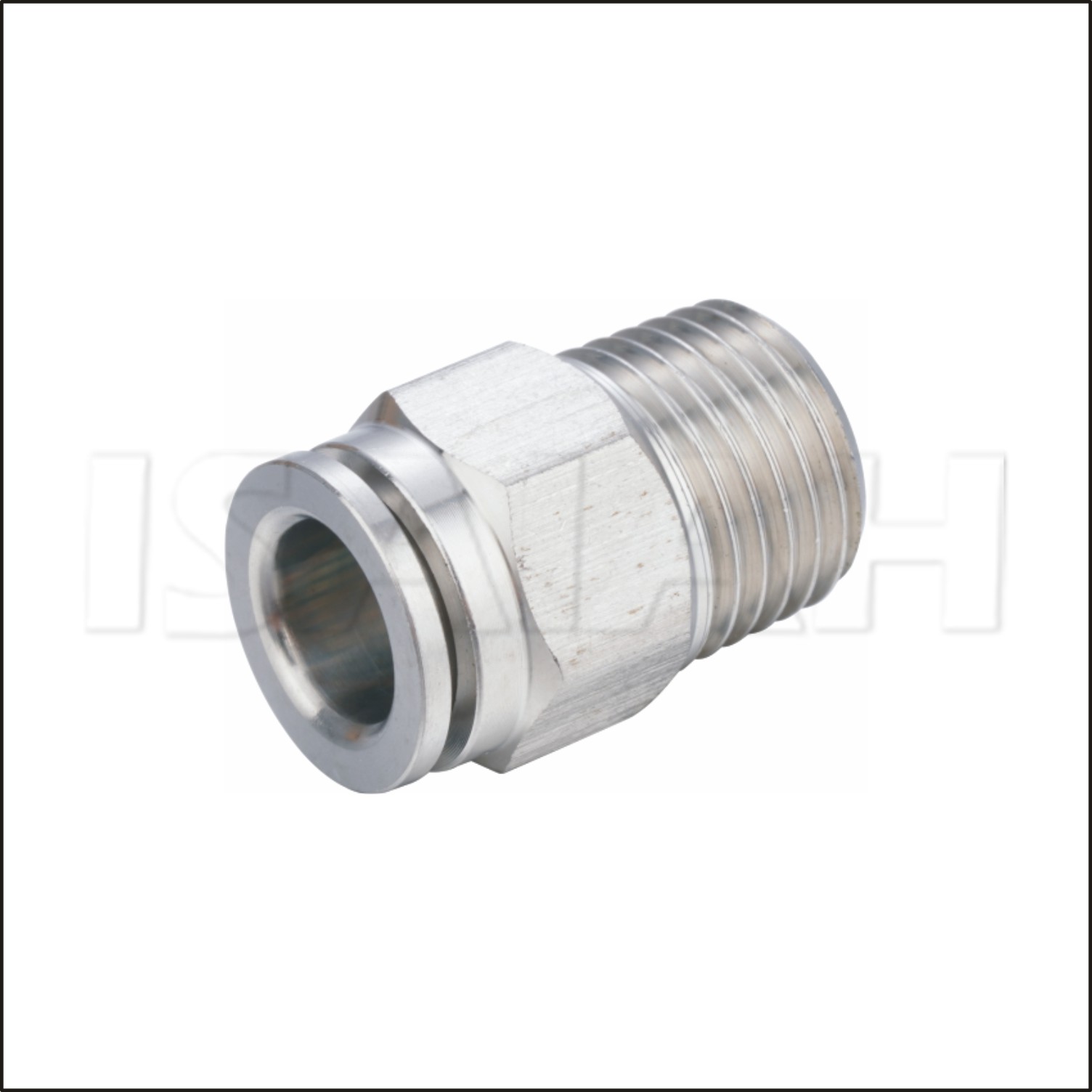
This stealthy progression makes pitting exceptionally dangerous. The damage concentrates in a tiny area, penetrating deep into the metal wall much faster than general corrosion. This often leads to sudden leaks in pressurized systems, causing severe safety hazards. Specifying a premium stainless steel water fitting designed for harsh conditions is critical to preventing these catastrophic blowouts.
The Secret Weapon: How the Chromium Passive Layer Protects System Integrity
To defeat pitting, engineers must look at the atomic level. For steel to earn the stainless classification, it must contain a minimum of 10.5 percent chromium. When this chromium interacts with oxygen in the surrounding air or fluid, a fascinating chemical reaction occurs. It forms an ultra-thin, invisible, and highly adherent layer of chromium oxide across the metal surface. This passive layer acts as a microscopic force field, blocking moisture from reaching the underlying iron.
The true brilliance of this passive layer lies in its self-healing property. If a technician accidentally scratches the surface during installation, the newly exposed chromium instantly reacts with ambient oxygen to regenerate the protective oxide film. This dynamic, self-repairing characteristic explains why premium inox fittings significantly outlast traditional carbon steel components in harsh industrial environments.
However, this microscopic shield has limits. When corrosive media are introduced, they aggressively attack the passive layer. If the concentration of chlorides is high enough, or if fluid becomes trapped in a tiny surface crevice, the ions break down the chromium oxide faster than it can regenerate. The localized area becomes anodic, the surrounding passive area becomes cathodic, and a galvanic reaction accelerates the drilling of a pit directly into the bare steel.
304 vs. 316L: Which Alloy Survives Chloride Environments?
Grade 304 is the most widely used austenitic stainless steel globally. It typically features 18 percent chromium and 8 percent nickel. This composition provides excellent defense against general atmospheric corrosion and remains highly durable in standard applications. For indoor plumbing, municipal drinking water, and general-purpose pneumatic systems operating within standard parameters, sourcing high-quality China 304 Stainless Steel Fittings offers an optimal and cost-effective strategy.
Despite its versatility, 304 struggles in chloride-rich environments. Exposing a 304 component to seawater or heavy industrial cleaning chemicals will almost certainly result in rapid pitting. When the operational environment turns hostile, engineers must upgrade to 316L. This modified alloy adjusts the chemical recipe to roughly 16 percent chromium, 10 percent nickel, and crucially introduces 2 to 3 percent molybdenum.
To make an informed procurement decision, review the core differences and standard operating parameters in the table below.
Feature / Specification
304 Stainless Steel
316L Stainless Steel
Molybdenum Content
0%
2% - 3%
Pitting Resistance (PREN)
18 - 20 (Standard)
23 - 28 (High)
Max Operating Pressure
Up to 2.0 MPa
Up to 2.0 MPa
Temperature Range
-20°C to 150°C
-20°C to 150°C
Ideal Applications
Freshwater, Pneumatics, HVAC
Marine, Chemical, High-Chloride
The Role of Molybdenum in 316L Fluid Components
Molybdenum is the definitive game-changer in the fight against localized corrosion. This dense transition metal fundamentally alters how the passive layer behaves under chemical duress. At the microscopic level, molybdenum acts as a stabilizing agent for the chromium oxide film.
When chloride ions attempt to penetrate the surface, the presence of molybdenum significantly increases the activation energy required to break the chemical bonds of the passive layer. It reinforces the microscopic shield, making it far more robust. Consequently, specifying molybdenum-bearing alloys is a strict engineering requirement for offshore oil rigs, chemical processing plants, and wastewater treatment facilities to prevent catastrophic leaks.
Why Low Carbon Designations Matter for Welded Water Systems
Corrosion resistance can be severely compromised during the installation process. Standard 316 stainless steel contains up to 0.08 percent carbon. When subjected to the extreme heat of a TIG or MIG welder, typically between 425°C and 815°C, carbon atoms migrate. They bind with chromium to form chromium carbides at the grain boundaries. This sensitization process strips the surrounding metal of its protective chromium, leaving the weld seam highly vulnerable to intergranular corrosion.
Metallurgists created the L designation to combat this specific failure mode. By restricting the maximum carbon content to 0.03 percent, the 316L alloy lacks the necessary carbon to form detrimental carbides during heating. When you install a welded fluid component made of 316L, the chromium remains evenly distributed throughout the metal matrix. The weld seam retains the exact same robust pitting resistance as the rest of the pipeline.
Calculating Defense: The Pitting Resistance Equivalent Number
Procurement managers do not have to guess how well a specific alloy will survive in the field. Industry professionals use a standardized mathematical formula to predict and compare the pitting resistance of different metals. We call this the Pitting Resistance Equivalent Number, or PREN.
The standard formula is calculated based on the chemical composition found in the material test report. The equation is PREN = %Cr + 3.3 * %Mo + 16 * %N. By applying this formula, the stark difference between grades becomes numerically clear.
A standard 304 alloy yields a PREN score between 18 and 20. Thanks to the multiplier applied to its molybdenum content, 316L achieves a PREN score ranging from 23 to 28. A higher number guarantees a stronger defense against localized chloride attacks. This allows buyers to objectively specify the exact metallurgical grade required for their operational environment.
Choosing a Qualified Manufacturing Partner for Your Project
Understanding metallurgical science is only the first step in protecting your fluid systems. Theoretical capabilities mean very little if the actual manufacturing process is flawed. Even the highest-grade raw materials fail prematurely if they are improperly machined or contaminated during production. Selecting a highly competent stainless steel fitting manufacturer directly impacts the longevity of your infrastructure.
The most significant risk in sourcing industrial components is material substitution. Mistakenly installing a standard component instead of a molybdenum-enriched one in a chloride environment leads to rapid system failure. A reputable manufacturer eliminates this risk through rigorous material traceability, providing Material Test Reports that prove the alloy chemical composition.
Physical surface finish is just as important as chemical composition. Pitting typically begins in microscopic surface defects like machining grooves. Advanced facilities utilize Computer Numerical Control machining centers to achieve exceptionally smooth surface finishes. Top-tier suppliers also perform chemical passivation after machining. This removes free iron from the surface and accelerates the formation of a robust passive layer. Finally, strict dimensional inspections and pneumatic pressure testing ensure components withstand their rated working pressures seamlessly.
Conclusion
Pitting corrosion is an aggressive threat that ruins expensive fluid systems and causes severe operational downtime. By understanding the underlying metallurgy, you can engineer this problem out of your infrastructure completely. The microscopic chromium passive layer is your first line of defense, but it requires the right chemical reinforcements.
Standard 304 grades are perfectly suited for standard freshwater applications. However, when harsh chlorides or heavy chemicals enter the system, upgrading to the molybdenum-rich 316L grade is an absolute necessity. Combine this metallurgical science with a trusted manufacturing partner that provides transparent material traceability, precision CNC machining, and rigorous pressure testing. For high-performance fluid control solutions that meet these exact engineering standards, explore the comprehensive catalog at IsaiahPC to future-proof your next pipeline project.
Frequently Asked Questions
Can 304 stainless steel fittings rust or pit?
Yes. While 304 stainless steel resists general rust in normal atmospheric conditions, it is vulnerable to pitting in specific environments. The primary trigger is exposure to high concentrations of chlorides found in seawater or industrial bleach. When chloride levels exceed safe thresholds, aggressive ions penetrate the chromium oxide passive layer faster than it can regenerate.
Is 316L stainless steel completely immune to pitting?
No metal is entirely immune to corrosion under all possible conditions. However, 316L offers vastly superior resistance compared to standard alloys. The addition of molybdenum significantly strengthens the passive layer against chloride attack. In extreme conditions like boiling magnesium chloride, even 316L may experience pitting, necessitating specialized duplex stainless steels.
Can I use a 304 stainless steel fitting for a drinking water system?
Absolutely. Grade 304 is the globally recognized industry standard for municipal drinking water systems. Freshwater naturally lacks the high chloride concentrations required to initiate pitting corrosion. High-quality 304 components are inherently lead-free and non-toxic, making them fully compliant with strict health and safety standards.
What is the exact difference between 316 and 316L?
The fundamental difference lies in the carbon content. Standard 316 contains a maximum carbon content of 0.08 percent, while 316L is restricted to a maximum of 0.03 percent. This reduction prevents carbide precipitation during the high heat of welding, ensuring the weld seam remains fully corrosion-resistant.
How can I tell if my manufacturer is providing real 316L?
Visual inspection cannot differentiate between 304 and 316L. You must rely on empirical data. Always ask your supplier for a Material Test Report specific to the heat lot of your order. For absolute certainty, hire a third-party inspection agency to perform Positive Material Identification testing using an XRF scanner to confirm the molybdenum content.
How fast can pitting corrosion occur in stainless steel?
The speed of pitting depends entirely on the concentration of chlorides, temperature, and fluid velocity. In highly aggressive, stagnant saltwater environments, a standard 304 pipe can develop a pinhole leak in a matter of weeks. Upgrading to 316L and maintaining proper fluid flow significantly extends the lifespan to decades.
Does temperature affect the pitting resistance of pipe fittings?
Yes, temperature plays a critical role in corrosion rates. As fluid temperature rises, the chemical activity of chloride ions increases, making them more aggressive against the passive layer. Engineers use a metric called the Critical Pitting Temperature to determine the exact thermal threshold where a specific alloy will begin to fail in a given chemical environment.
Mainly produce the pneumatic components, pneumatic control components, pneumatic actuators, air condition units etc. The sales network are all over the provinces of China,
and more than 80 countries and regions in the world.