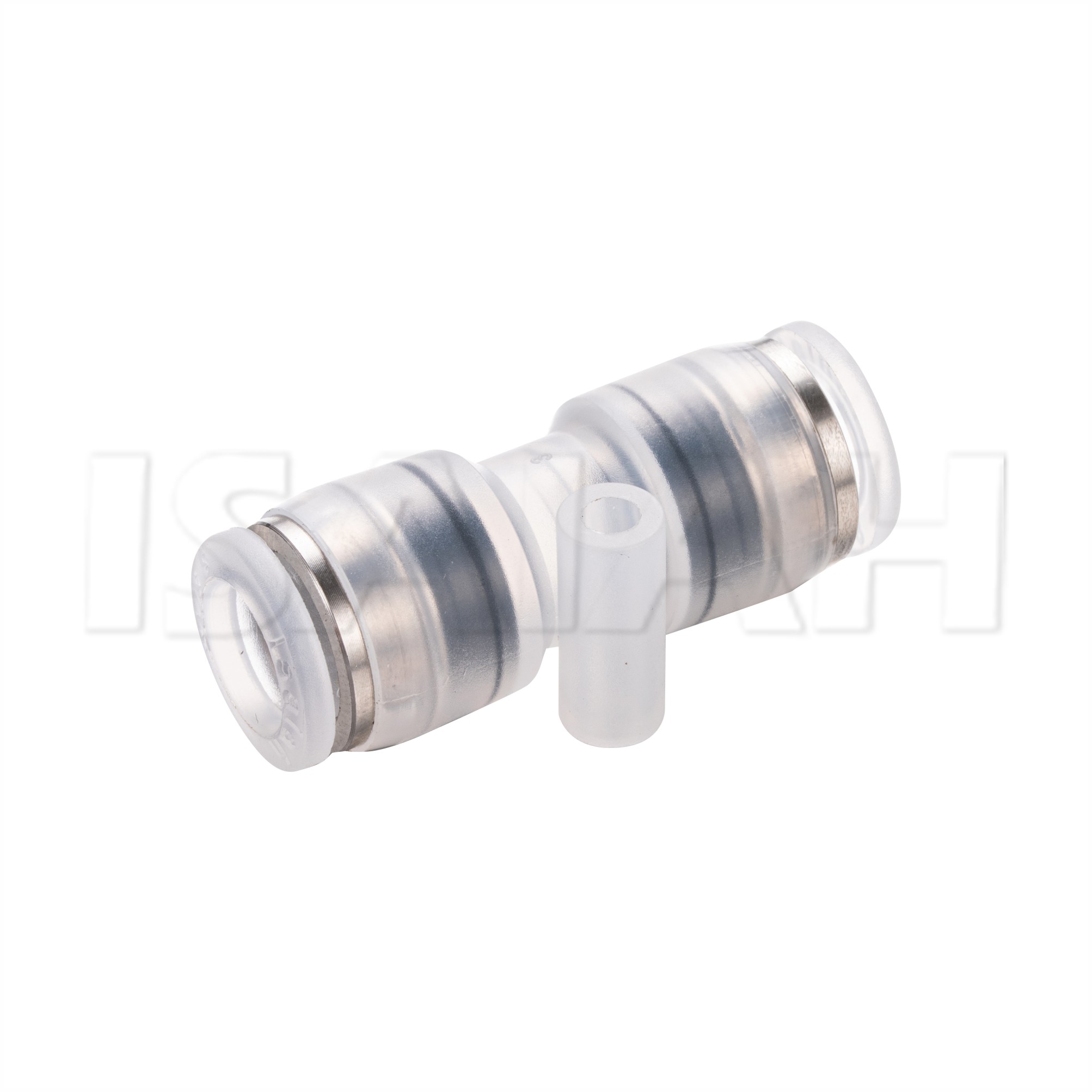
A single microscopic particle will ruin an entire production batch. Standard industrial pipes degrade rapidly in highly sensitive environments. They shed invisible debris directly into the fluid stream. This contaminant release triggers catastrophic system failures, ruined product yields, and massive operational downtime.
Recent market analysis highlights a critical shift in contamination control across high-tech sectors. Semiconductor fabrication now routinely breaches the sub-3-nanometer threshold, meaning even nanoscale dust causes fatal short circuits on silicon wafers. Simultaneously, biopharmaceutical regulations demand absolute purity to meet USP Class VI standards. Consequently, the industry tolerance for particulate generation has dropped to absolute zero. Facility engineers are discarding legacy plumbing solutions. They now mandate specialized fluid components engineered at the molecular level to secure process integrity.
Engineered clean components prevent contamination at the source. Understanding the advanced materials, mechanical designs, and rigorous manufacturing protocols is essential for anyone managing high-purity fluid networks.
Key Takeaways
Particle shedding is primarily triggered by surface roughness, chemical degradation, and mechanical wear found in standard industrial joints.
Clean fittings neutralize shedding through ultra-smooth internal surface finishes and crevice-free geometries that eliminate fluid friction and stagnant zones.
High-purity polymers offer exceptional chemical resistance and thermal stability, ensuring no material leaching or flaking occurs under high pressure.
Advanced connection mechanisms provide secure, leak-free seals without introducing the mechanical stress that generates plastic dust during installation.
Top-tier manufacturers assemble, wash, and vacuum-package these components inside ISO-certified cleanrooms to guarantee zero environmental contamination.
What is Particle Shedding and Why Does it Threaten High-Purity Systems?
Particle shedding is a destructive physical and chemical degradation process. Microscopic fragments detach from the inner walls of a piping system and enter the process media. While a few suspended particles might go unnoticed in a municipal water line, this phenomenon severely compromises the structural integrity and fluid purity of high-tech manufacturing environments.
The primary driver of particulate generation is mechanical friction. Fluids traveling at high velocity create intense shear stress against pipe walls. Turbulent fluid flow, sudden pressure spikes, and water hammer effects physically tear standard plastics over time. As the material wears down, micro-particles break free and travel downstream directly into sensitive equipment.
Chemical degradation accelerates this process. This takes place when the fitting material is incompatible with the transported media. Aggressive solvents, highly acidic solutions, and extreme temperatures cause standard polymers to oxidize, swell, or become brittle. The molecular chains break down, causing the material to lose its structural cohesion. This reaction releases chemical leachates and physical flakes into the fluid stream, permanently altering the chemical makeup of the process fluid.
Standard industrial joints are designed primarily for basic functionality, hiding microscopic ridges and jagged burrs along their internal walls. High-velocity fluid rushes over these imperfections, and the sheer force snaps them off. The microscopic valleys between these ridges act as dangerous traps. They capture debris and encourage bacterial colonization. These bacterial clusters eventually dislodge, re-entering the fluid stream in highly concentrated bursts.
The Engineering Behind Clean Fittings: Preventing Contamination at the Source
Fluid dynamic engineers developed specialized clean components to combat the exorbitant costs of contamination. These designs eliminate the variables that cause standard plumbing to degrade, focusing heavily on minimizing physical flow resistance.
The most critical engineering feature of a clean component is its internal surface roughness, scientifically measured as an Ra or Roughness Average value. Standard fittings possess porous, rough interiors. Clean alternatives are precision-molded and post-polished to achieve incredibly low Ra values. Creating a glass-like internal surface offers the fluid virtually zero resistance. Without microscopic peaks to erode, friction-based shedding is entirely neutralized.
In fluid dynamics, a dead leg refers to a stagnant branch or crevice where flow slows down or stops. Standard threaded fittings notoriously create small gaps where the pipe meets the joint. These dead zones allow bacteria to bloom and particulates to gather. Clean fittings utilize engineered geometries that ensure continuous, sweeping fluid flow. Perfectly aligning the internal diameters eliminates the stagnant zones where contamination breeds.
Turbulence remains a major catalyst for micro-erosion. Fluid hitting an abrupt edge or a sudden change in pipe diameter creates vortexes and high shear forces. Clean fittings are engineered to provide seamless transitions. The internal diameter of the fitting perfectly matches the connecting tubing to maintain laminar flow. This drastically reduces the kinetic energy that typically tears particles away from the plastic walls.
Core Comparison: Standard vs. Engineered Clean Components
Feature
Standard Industrial Fittings
Engineered Clean Fittings
Internal Surface (Ra)
High roughness, visible burrs
Ultra-smooth, glass-like finish
Flow Geometry
Prone to dead-legs and turbulence
Zero dead-leg, seamless transitions
Material Composition
Contains plasticizers and UV stabilizers
100 percent virgin, unpigmented resin
Assembly Method
Threaded grinding or chemical gluing
Frictionless push-to-connect seals
Particle Shedding Risk
High (continuous degradation)
Virtually Zero
Material Superiority: The Role of a High-Purity PP Resin Fitting
Design geometry is only half the equation. The material composition dictates long-term stability under severe operating conditions. Material scientists consistently rely on Polypropylene as the baseline for contamination control in highly regulated applications.
A high-quality PP resin fitting provides exceptional chemical inertness. Metals corrode and standard PVC degrades under harsh conditions. High-purity PP resists reacting with a broad spectrum of aggressive acids, bases, and organic solvents. The polymer matrix does not chemically interact with the fluid. It maintains its structural integrity, preventing the plastic from breaking down and shedding into the chemical delivery line.
High-purity PP features a highly ordered, semi-crystalline molecular structure. This structure provides the component with significant mechanical toughness and thermal stability. It easily withstands the physical stress of pressurized fluid transfer and the thermal expansion associated with temperature variations. Preventing micro-cracking is vital because these microscopic fissures are the primary source of plastic flaking.
Standard industrial plastics require a cocktail of additives to make them functional. Manufacturers use plasticizers for flexibility, UV stabilizers, and colorants. These additives leach out over time and contaminate the fluid. Clean PP resin is manufactured without these fillers. It is an unpigmented, pure polymer. Because there are no additives present in the matrix, there is absolutely nothing to leach out into your high-purity water or chemical streams.
Connection Mechanics: Advancing with the PP Pipe Push Fitting
The method used to assemble a system is just as critical as the material itself. Traditional installation methods notoriously generate contamination before the system is even operational.
Traditional threaded connections require mechanical grinding to create a seal. The threads scrape against each other as they twist together under high torque. This action generates a fine plastic dust that falls directly into the fluid path. Utilizing a PP pipe push fitting eliminates this issue entirely. Installers achieve a secure, permanent connection simply by pushing the tube into the joint. There is no twisting, threading, or chemical gluing involved. This frictionless assembly ensures zero microscopic debris is generated during installation.
Push-to-connect designs utilize internal elastomeric O-rings to isolate the fluid path. Premium designs typically feature high-purity EPDM or FKM seals. Inserting the tubing compresses the O-ring radially to create an immediate, leak-proof seal. This barrier isolates the internal fluid pathway from the external environment. It also shields the fluid from the internal stainless steel gripping teeth, ensuring no mechanical components ever touch the high-purity media.
Modern clean systems require absolute uniformity. These frictionless push-to-connect mechanisms are specifically designed to integrate seamlessly with standard pp pipe fitting networks. Ensuring that both the tubing and the joint share the exact same material properties and thermal expansion coefficients allows engineers to create a unified fluid pathway. This non-shedding system behaves predictably under fluctuating pressures and temperatures.
Factory to Facility: How Clean Fittings Manufacturers Guarantee Purity
A component's advanced geometry and pure material are rendered useless if it becomes contaminated before reaching the end user. The manufacturing environment acts as the final, critical barrier against particle shedding.
Airborne dust is a massive threat during production. A dust particle settling on molten plastic during injection molding becomes permanently embedded. Once exposed to aggressive chemicals later, this impurity dislodges and causes a shedding event. Reliable Clean Fittings Manufacturers mold their components entirely inside ISO Class 7 or Class 8 cleanrooms. They utilize strict HEPA filtration and oil-free processing equipment to eliminate airborne contaminants.
The molding process can leave behind trace amounts of static dust or microscopic polymer flash even inside a cleanroom. Post-production, these components undergo a rigorous washing protocol. Technicians submerge the fittings in 18.2 megohm-cm Ultra-Pure Water and subject them to ultrasonic waves. The cavitation bubbles generated by the high-frequency sound waves safely strip away any residual micro-particles without damaging the ultra-smooth internal finish.
Manufacturers package the components directly inside the cleanroom environment to maintain absolute purity during shipping and storage. They utilize double-bagging techniques and vacuum sealing to isolate the products. This dual-layer protection guarantees that from the moment the fitting leaves the ultrasonic bath to the moment it is opened inside a clean facility, it remains completely untouched by environmental contaminants.
Actionable Selection Guide for Fluid System Engineers
Selecting the correct components requires a methodical evaluation of material data and supplier credibility. Procurement managers and facility engineers should focus on specific criteria to ensure long-term system integrity.
Always request comprehensive material data sheets from your supplier. Ensure that the component is molded from virgin, unpigmented resin without the addition of recycled regrind, plasticizers, or UV stabilizers. Look for explicit compliance with industry standards such as FDA CFR 21, RoHS, or SEMI. These certifications verify the absence of hazardous leaching chemicals.
Evaluate the maintenance requirements of your specific facility. Opt for frictionless push-to-connect designs for environments that require frequent reconfigurations, maintenance cycles, or rapid assembly. This connection type eliminates the risk of human error and particulate generation during installation. The system remains pristine from day one.
Do not accept the label "clean" at face value. Scrutinize the manufacturer's production environment. Ask for documentation proving that their injection molding and packaging processes occur within certified ISO cleanrooms. Confirm that they utilize UPW ultrasonic cleaning prior to packaging. A transparent and reliable manufacturer readily provides audit reports and facility certifications.
Conclusion
Clean fittings act as the ultimate defense against particle shedding in high-purity fluid networks. Combining ultra-smooth internal geometries with chemically inert, pure polymers eliminates the friction and degradation that destroy standard industrial plumbing. Frictionless push-to-connect mechanisms stop mechanical wear during assembly, while stringent cleanroom manufacturing guarantees that fluid purity is never compromised by environmental dust.
Investing in these quality components is not merely a system upgrade. It is a critical insurance policy against catastrophic contamination and costly operational downtime. If you are managing a sensitive fluid network, you must upgrade your systems to meet modern zero-tolerance standards. Explore the trusted engineering solutions at https://www.isaiahpc.com to find the perfect straight unions, elbows, and specialty clean configurations tailored specifically for your rigorous applications.
FAQ
What is the exact difference between a standard industrial fitting and a clean resin fitting?
While both may be manufactured from similar base polymers like polypropylene, their formulation and production environments differ drastically. A standard fitting is designed for general use. The plastic often contains fillers, UV stabilizers, colorants, and plasticizers to reduce costs. These additives degrade over time, leading to chemical leaching and particle shedding. A clean fitting is molded exclusively from virgin, unpigmented high-purity resin. Clean fittings are manufactured, ultrasonically washed, and vacuum-sealed inside ISO-certified cleanrooms to ensure zero environmental contamination.
How does a push-to-connect design prevent contamination during the installation process?
Installation is a highly vulnerable moment for contamination control. Traditional threaded joints require two surfaces to be ground against one another under high torque. This physically shears microscopic flakes of plastic directly into the fluid path. A push-to-connect design eliminates this mechanical friction entirely. The installer simply pushes the tubing straight into the joint. Internal elastomeric O-rings compress radially to form a leak-proof seal without any twisting, gluing, or threading. This ensures zero particulate debris is generated during assembly.
Can these specialized fittings handle aggressive chemicals without shedding or degrading?
Yes, provided they are manufactured from the correct high-purity polymer. High-purity PP possesses exceptional chemical inertness due to its stable, semi-crystalline molecular structure. It is highly resistant to a broad spectrum of harsh chemicals, including strong acids, concentrated bases, and various organic solvents. Lesser plastics swell, soften, or embrittle when exposed to these media. Pure polymers maintain their structural integrity, ensuring that the internal walls do not micro-crack or shed particles into the chemical stream.
What specific criteria should I look for when auditing a manufacturer for high-purity components?
When vetting a manufacturer, you must look beyond the final product specifications and examine their operational protocols. Verify their cleanroom certifications. Injection molding and packaging must occur in ISO Class 7 or Class 8 environments. Evaluate their cleaning processes. The manufacturer should employ ultrasonic cleaning baths utilizing Ultra-Pure Water with a resistivity of 18.2 megohm-cm. Inspect their packaging standards. Components must be double-bagged and vacuum-sealed within the cleanroom to prevent transit contamination.
Are clean fittings reusable after they have been installed in a system?
Many push-to-connect designs can be disconnected and reconnected multiple times without losing their gripping strength from a purely mechanical standpoint. Reuse is generally discouraged in highly regulated environments like semiconductor fabrication or biopharmaceutical processing from a strict contamination control perspective. Disconnecting a joint exposes the internal fluid path and the O-ring to airborne contaminants. Industry best practices dictate using new, factory-sealed components whenever a system is modified or repaired to guarantee absolute zero contamination and ensure optimal seal integrity.
How is particle shedding measured in cleanroom piping?
Engineers utilize highly sensitive liquid particle counters and scanning electron microscopy to analyze the fluid stream for microscopic debris. By establishing baseline particle counts before and after fluid passes through a specific joint, facility managers can determine the exact shedding rate under various flow and pressure conditions.
Why is surface roughness Ra so important for fluid purity?
Surface roughness dictates how much friction occurs between the moving fluid and the pipe wall. High Ra values mean the surface is covered in microscopic peaks and valleys. Fluid velocity shears off the peaks, generating physical particles. The remaining valleys trap bacteria and chemical residues, which eventually release back into the clean stream and ruin the batch.
Mainly produce the pneumatic components, pneumatic control components, pneumatic actuators, air condition units etc. The sales network are all over the provinces of China,
and more than 80 countries and regions in the world.