In modern industrial automation, manufacturing, and fluid management systems, air control valves represent one of the most essential components for achieving reliable and intelligent control. Whether they are used in pneumatic machinery, production lines, automated assembly systems, or various types of process control equipment, these valves ensure that liquids and gases move precisely as intended. Their ability to regulate flow, pressure, direction, and timing makes them indispensable in the world of automation and industrial engineering.
This article provides a complete and well-rounded introduction to air control valves, beginning with their core functions and working principles—topics that many customers and engineers often seek to understand in depth. After clarifying these foundational concepts, the article expands into real-world applications, performance advantages, and finally a detailed yet practical troubleshooting section. This balanced approach offers both theoretical understanding and actionable insights, giving readers a full picture of how air control valves operate and how they can maintain optimal performance in industrial environments.
The Essential Role of Air Control Valves in Industrial Automation
Air control valves are devices that use pneumatic signals to manipulate the movement of fluids, including both gases and liquids. Their primary mission is to ensure that fluid flow follows defined paths, meets process requirements, and responds correctly to system commands. In automated environments, these valves work continuously in the background, driving cylinders, actuators, pneumatic tools, and various flow-sensitive components to complete complex tasks with precision.
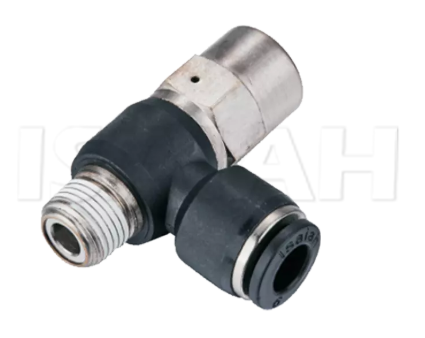
Directional Control of Fluid Flow
One of the most fundamental functions of an air control valve is the ability to determine the direction in which fluid travels. By shifting the valve’s internal spool or poppet, certain passages open while others close, allowing the system to redirect air or liquid to a specific endpoint. For example:
A pneumatic cylinder may need to extend at one moment and retract in the next.
A conveyor system may need compressed air to feed into different zones at different stages of operation.
A robotic arm may need controlled airflow to different actuators depending on the movement required.
Through these directional changes, industrial equipment can perform multi-step operations smoothly, safely, and efficiently.
Pressure Regulation and System Stability
In addition to controlling direction, air control valves help maintain appropriate system pressure. Stable pressure is crucial for:
Ensuring actuator force remains consistent
Preventing damage to sensitive downstream components
Maintaining proper cycle timing in automated processes
Reducing energy waste and protecting system integrity
A well-designed air control valve ensures that even when system demand fluctuates, the overall operating pressure remains within safe and optimal ranges.
Flow Rate Adjustment and Fine Control
In more advanced applications, air control valves are also responsible for adjusting the volume of fluid being delivered. Flow rate control is essential for tasks such as:
Regulating the speed of pneumatic cylinders
Controlling the torque output of pneumatic tools
Maintaining uniform airflow in drying or cooling systems
Balancing hydraulic or pneumatic circuits
This ability to modulate flow with precision is one reason why air control valves are vital in industries requiring high accuracy, such as electronics, automotive assembly, and medical device manufacturing.
Integration into Automated Logic
Modern automation depends not only on hardware but also on logic—coordinated sequences of actions triggered by sensors, timers, and controllers. Air control valves translate those digital or pneumatic commands into physical actions. When combined with:
Sensors
PLCs and controllers
Solenoids
Pneumatic actuators
Industrial networks
the air control valve becomes part of a larger intelligent ecosystem capable of executing fully automated operations.
Working Principle of Air Control Valves
Understanding how an air control valve works begins with recognizing its internal construction and how pneumatic force interacts with mechanical components. Although there are many valve types and configurations, the principles remain consistent across most designs.
Key Structural Components
A typical air control valve is built from several essential parts, each performing a specific function:
Valve body: A rigid housing that defines the internal chambers and flow paths
Valve spool or poppet: A movable core component that shifts to open, close, or redirect passages
Spring: Provides the default (rest) position when no pneumatic pressure is applied
Pneumatic control port(s): Receive compressed air signals that trigger valve actuation
Seals, O-rings, and valve seats: Prevent leakage and maintain consistent operation
End covers and fittings: Support the structure and allow connection to the system
The valve spool is the heart of the mechanism. Its linear or rotary motion determines how fluid flows through the system.
Pneumatic Actuation Mechanism
When the pneumatic control port receives compressed air, the pressure applies force to one side of the spool. When this force exceeds the opposing spring force, the spool moves. This movement:
When the air signal is removed, the spring pushes the spool back to its original position, returning the valve to its default state.
Opening, Closing, and Modulating Behavior
The precise position of the spool depends on the balance between:
The applied pneumatic pressure
The internal spring tension
The friction and resistance of seals and guides
Higher pressure pushes the valve further into its actuated position, while lower pressure allows partial or incomplete movement. This makes air control valves suitable not only for on/off control but also for proportional or semi-proportional applications where fine adjustments are necessary.
Integration with Sensors and Control Systems
In real industrial settings, air control valves rarely operate independently. Instead, they integrate seamlessly with control systems that coordinate complex mechanical sequences. For example:
A sensor detects the presence of a product on a conveyor and sends a signal.
The controller interprets that signal and sends a command to the air control valve.
The valve then shifts airflow to a pneumatic pusher, guiding the product to the next step.
Through thousands of such micro-interactions, automation systems achieve smooth, synchronized motion.
Common Industrial Applications of Air Control Valves
Air control valves are used across virtually every manufacturing and process industry. They power:
Pneumatic cylinders in machine tools and packaging machines
Clamping, pressing, and lifting mechanisms in assembly systems
Air-driven sorting, feeding, and reject systems
Fluid routing networks in processing plants
Cooling and ventilation control in production facilities
Precision systems requiring pressure and flow stability
Their versatility makes them essential for industries including automotive, electronics, textiles, pharmaceuticals, food processing, logistics, and energy.
Performance Advantages of Modern Air Control Valves
High-quality air control valves deliver several critical advantages:
Fast response time for high-speed automation
Long service life due to durable construction and optimized sealing
Energy efficiency through precise flow management
Low maintenance requirements
Stable performance even under demanding environmental conditions
These characteristics enable consistent productivity and reduce system downtime.
Five Practical Troubleshooting Steps for Air Control Valves
Even with robust design, air control valves may occasionally experience performance issues. The following five troubleshooting methods—derived from field experience—can help technicians quickly identify and resolve common problems.
Check the Power, Signal, and Air Supply
Ensure voltage to solenoids is stable
Check air pressure at the control port
Inspect cables, connectors, and fittings
Unstable or insufficient signals often cause delayed or incomplete valve actuation.
Look for Air Leaks or Blockages
Use soapy water to detect leaks
Inspect fittings, seals, and tubing
Clear debris or residue from internal channels
Leaks reduce system pressure, while blockages restrict movement.
Clean and Lubricate Internal Components
Contaminants may cause the spool to stick or move sluggishly.
Always use manufacturer-approved lubricants to avoid damage.
Examine the Pilot Control System (If Applicable)
Check for clogged pilot passages
Inspect the solenoid function
Examine diaphragms or seals
A faulty pilot system prevents the main valve from shifting properly.
Recalibrate System Settings
After system upgrades or maintenance, ensure:
Pressure settings are correct
Flow parameters match equipment requirements
Control logic is synchronized with sensors and actuators
Small calibration errors can cause major system performance issues.
Conclusion
Air control valves are fundamental elements of modern industrial automation. By controlling direction, pressure, and flow with high precision, they enable reliable and efficient operation across a vast range of applications. Understanding their functions, structure, and working principles helps engineers and operators make informed decisions about system design, maintenance, and performance optimization.
With proper installation, regular inspection, and timely troubleshooting, air control valves deliver long-term stability and ensure smooth operation throughout the entire automation process.