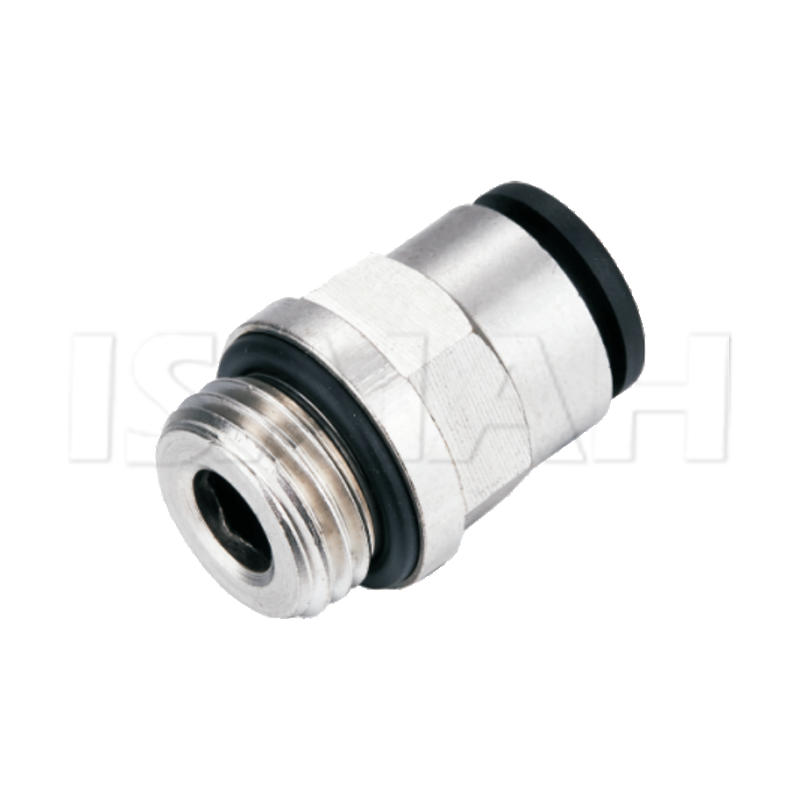
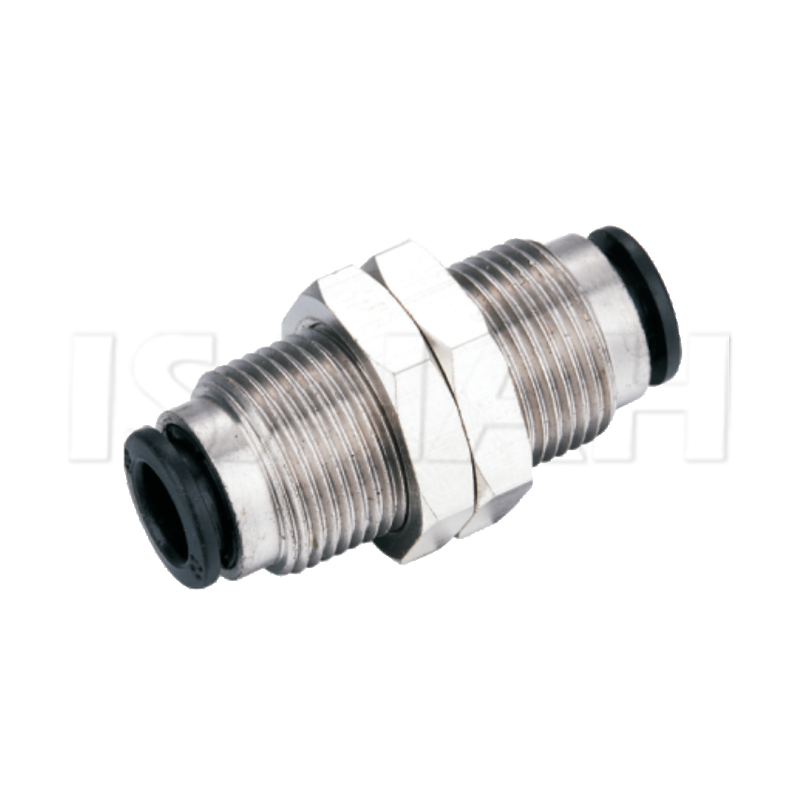
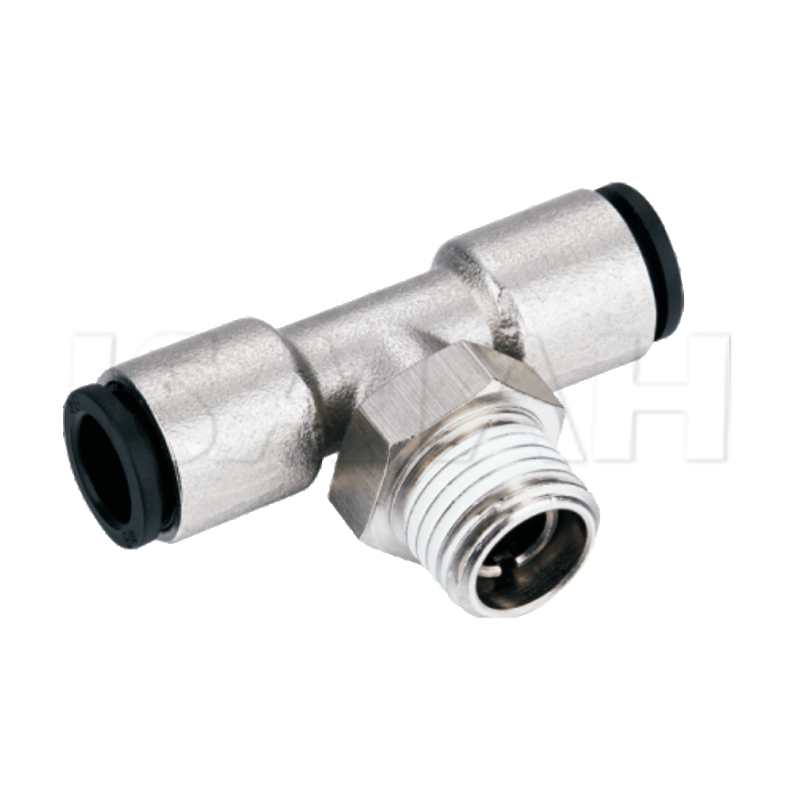
Unplanned downtime and continuous air leaks drain profitability in industrial automation systems daily. A single poorly chosen connector can compromise an entire automated production line. They lead to significant energy waste, reduced actuator speeds, and severe productivity losses. Traditional compression fittings certainly have their place in permanent, heavy-duty installations where movement is minimal. However, modern assembly environments demand incredible speed and modular flexibility. The industry standard for rapid assembly has shifted almost entirely to quick-connect solutions.
This article provides an objective, engineering-focused framework for evaluating these critical components. You will learn how to shortlist, match, and implement the right connectors for high-cycle environments. We aim to help you build reliable, leak-free systems effortlessly. By understanding core material differences and failure modes, you can guarantee long-term pneumatic stability.
Key Takeaways
Material selection (composite, brass, stainless steel) must align strictly with environmental exposure and media types, not just upfront cost.
The primary failure modes of push in fittings (leaks, blowouts, stuck tubes) are largely preventable through proper tube pairing and strict installation protocols.
Standardizing on certified one touch tube fittings reduces labor costs during assembly and expedites predictive maintenance.
Vendor evaluation should prioritize verifiable pressure/temperature ratings, compliance certifications (ISO, FDA, DOT), and robust CAD/spec availability.
The Business Case: When to Specify Pneumatic Push in Fittings
Many facility managers question when to adopt pneumatic push in fittings over legacy threaded options. The answer often lies in simple assembly economics. Technicians spend countless hours taping and tightening traditional threaded components. Quick-connect alternatives bypass this tedious manual labor entirely. You simply press the hose directly into the collar. This fluid action secures the connection instantly. Companies typically see a 50 to 75 percent reduction in physical installation time across large-scale machine builds.
Modularity in automation also drives this technological shift. Automated assembly lines change rapidly. Engineers frequently execute tooling changes and modular machine swaps. High-density valve manifolds pack components incredibly tightly. You will often find wrench access physically impossible in these constrained spaces. The built-in release buttons allow for fast disconnections without specialized hand tools. They support swift maintenance turnarounds.
What defines a successful implementation? Success extends beyond mere installation speed. It requires a sustained zero-leak rate at your specified operating pressure. It involves a predictable mechanical lifecycle across thousands of pressure cycles. Furthermore, manual disconnections should feel smooth. The internal grip collet must release the hose seamlessly without gouging or scratching the exterior wall.
Core Evaluation Criteria: Matching Specs to Application
Operating Pressure and Vacuum Capabilities
System designers must perfectly match operating pressure ranges to application demands. Standard factory floor air networks usually hover around 100 to 150 psi. Most engineered composite connectors handle this baseline perfectly. However, specialized pneumatic presses require much higher structural ratings. You must select robust models rated for 250 psi or above to prevent blowouts. Vacuum capabilities prove equally crucial in packaging. Pick-and-place automation relies entirely on negative pressure. Standard components might leak ambient air under vacuum conditions. Always test for verified negative pressure ratings before finalizing your automation design.
Material Selection for Environmental Stress
Environmental stress dictates long-term material choices. You cannot base this critical decision purely on upfront purchase price.
Engineered Plastics/Composites: We recommend these for standard indoor air applications. They are lightweight, highly cost-effective, and easy to handle. However, prolonged UV light or aggressive cleaning chemicals will degrade the plastic quickly.
Nickel-Plated Brass: These excel in tough manufacturing environments. High-temperature zones strictly demand metal bodies. Weld-spatter areas and abrasive settings require the heavy-duty durability of brass.
Stainless Steel (316L): Washdown environments mandate this premium material. Food and beverage facilities strictly require FDA-compliant steel. Highly corrosive chemical handling also necessitates stainless steel to prevent rapid oxidation.
Material Suitability and Environment Matrix
Material Type | Primary Benefit | Ideal Application Environment | Common Vulnerability |
Composite Plastic | Lightweight, low cost | Standard factory floor automation | UV degradation, harsh chemicals |
Nickel-Plated Brass | High temperature resistance | Welding cells, abrasive areas | Extremely corrosive acids |
316L Stainless Steel | Corrosion and washdown proof | Food processing, medical facilities | Higher initial procurement price |
Thread Types and Sealing Mechanisms
Pneumatic networks utilize varied thread standards globally. You will regularly encounter NPT, BSPT, and BSPP formats. Mixing them causes instant thread stripping and severe leaks. NPT completely dominates North American manufacturing. BSPT features a unique taper commonly used throughout Asia. BSPP relies strictly on straight parallel threads.
Sealing mechanisms vary significantly by thread type. Tapered threads often arrive with pre-applied Teflon coatings. This factory-applied sealant saves valuable time during manifold assembly. Straight threads utilize built-in rubber O-rings. An O-ring guarantees a verifiable, error-free mechanical seat. It permanently eliminates the messy guesswork associated with standard thread tape.
Tubing Compatibility and System Synergy
The tube-fitting relationship fundamentally dictates system integrity. Reliable push in fittings are only as effective as the tubing they physically grip. If you pair premium metal connectors with cheap, out-of-spec hoses, the entire system inevitably fails.
Material pairing defines long-term mechanical performance. Polyurethane (PU) offers extreme flexibility and tight bend radii. It serves as the standard choice for dynamic moving parts. However, PU requires precise outer diameter tolerances. Out-of-spec PU walls cause immediate air loss. Nylon and Teflon (PTFE) serve specialized higher pressure needs. Rigid structural routing demands these tougher, less pliable materials. They necessitate internal grip mechanisms with much sharper, stronger metal claws. Soft plastic collets will simply slide off a rigid Nylon surface under high pressure.
Dimensional integrity actively prevents silent factory leaks. Assembly workers sometimes mistakenly mix metric tubing into imperial ports. A 6mm hose looks deceptively similar to a 1/4-inch hose. Inserting metric hoses into imperial collars guarantees catastrophic failure. Exact Outside Diameter (O.D.) matching remains an absolute operational mandate.
Mitigating Common Risks and Failure Modes (Field Realities)
Field maintenance forums often discuss a perceived leak stigma regarding this technology. Some veteran technicians mistrust quick-disconnect designs. They instinctively blame the component. In reality, improper usage causes most operational issues. You can permanently prevent these recurring failures by understanding actual field realities.
Root Cause 1: Poor Tube Preparation
Technicians often cut hoses hastily at an angle. They leave sharp plastic burrs on the outer edge. Squeezed or out-of-round tubing easily tears internal rubber O-rings. The sharp, jagged edge slices the delicate rubber seal during manual insertion. We recommend the following preparation steps:
Always use a dedicated, razor-sharp tube cutter rather than scissors.
Ensure the cut is perfectly perpendicular to the hose length.
Inspect the outer wall visually for deep scratches before insertion.
Push the hose firmly past the internal resistance point to guarantee a full seat.
Root Cause 2: Side-Loading
Lateral stress heavily distorts the internal seal. Hoses pulled too tightly bend the retaining collet sideways. The O-ring subsequently loses uniform 360-degree contact. Air silently escapes from the deformed gap. We highly recommend using 90-degree elbow or swivel configurations here. They eliminate destructive tube tension naturally and route air smoothly around corners.
Root Cause 3: Disconnection Failures
Occasionally, release mechanisms seize entirely. The plastic button refuses to budge. This typically happens when system pressure is not fully vented beforehand. Particulate ingress also jams the delicate metal collet. Dusty environments demand fully shielded release buttons. Specialized dust covers keep metal shavings and debris away from the internal claws, ensuring smooth operation.
Shortlisting Vendors for Enterprise-Grade Automation
Enterprise-grade automation requires rigorous, objective vendor selection. You cannot rely strictly on unverified online catalogs. Data accuracy and transparency matter immensely to design engineers. Favor suppliers offering comprehensive airflow restriction data. They must readily supply exact chemical compatibility charts. Downloadable 3D CAD models remain essential. Engineers deeply need these models for digital space validation before authorizing bulk purchases.
Compliance and precise traceability actively protect your entire operation. Ensure the vendor confidently meets strict global industry standards. ISO 14743 compliance dictates highly reliable pneumatic performance parameters. RoHS certification ensures critical environmental safety. FDA approval remains absolutely non-negotiable for food and beverage processing applications.
Supply chain consistency clearly separates premium brands from cheap alternatives. White-labeled, unbranded products carry massive hidden risks. You might face inconsistent O-ring materials from one batch to another. Grip ring hardness often varies wildly in cheap imports. Established manufacturers carefully maintain strict internal quality control. Their manufacturing consistency ensures your automated machines run continuously without unexpected pressure drops.
Conclusion
Choosing the correct pneumatic connector expertly balances multiple technical factors. You must thoughtfully weigh the harsh operational environment against precise system pressure demands. Immediate upfront savings vanish rapidly if continuous air leaks slow down your automated production. You achieve optimal operational value exclusively through careful material evaluation, strict tubing pairing, and precise installation methods.
Actionable next steps for your engineering and procurement teams:
Audit your current factory failure rates and pinpoint specific high-leakage zones.
Match your existing polyurethane or nylon tubing materials directly against proposed connector specifications.
Eliminate destructive side-loading by mapping your routing angles and utilizing swivel elbows.
Request detailed engineering specification sheets and physical product samples before committing to a facility-wide bulk transition.
FAQ
Q: Can you reuse pneumatic push in fittings?
A: Yes, they are designed for repeated use. However, O-ring wear and collet fatigue limit infinite reuse. Disconnecting a tube multiple times degrades the internal seal over time. You should always inspect the internal claws and rubber seals before reuse. Discard any component showing visible wear or scratching to prevent unpredictable field leaks.
Q: Why is my push in fitting leaking air?
A: The top three culprits are uneven tube cuts, side-loading, and degraded O-rings. An angled cut prevents the tube from seating flat against the internal stop. Lateral tension pulls the collet sideways, breaking the airtight seal. Finally, harsh chemical exposure or excessive ambient heat can harden and crack the internal rubber O-ring.
Q: Can I use liquid or water with pneumatic push to connect fittings?
A: Some connectors are strictly dual-rated for fluids and air. However, true pneumatic models often lack the proper O-ring material for water or aggressive chemicals. NBR seals excel in air but swell and degrade in water. Always verify with the manufacturer whether the internal seals use water-safe materials like EPDM.
Q: What is the difference between standard and DOT-approved push in fittings?
A: Standard automation models handle typical factory floor stresses and pressures. DOT-approved versions strictly meet the stringent fail-safe requirements of the Department of Transportation. They survive severe vibration, extreme temperature swings, and harsh road conditions. DOT models use specialized internal brass support sleeves specifically designed for commercial vehicle air brake systems.

 English
 简体中文
简体中文