Understanding the internal mechanics of a threadless connection is merely the foundational step for any fluid systems engineer. At its core, a threadless mechanism relies on an ingenious synergy between a stainless steel grab ring and an elastomer seal. When you push the tubing into the receptacle, the metal collet teeth angle backward, allowing the tube to slide past. However, the moment internal pressure builds, or the tube experiences a pulling force, those microscopic teeth bite aggressively into the outer wall. Simultaneously, the internal fluid pressure compresses the O-ring against the tubing, creating an airtight, impenetrable barrier.
Recent industry analysis regarding industrial maintenance trends highlights a massive shift in how modern manufacturing facilities operate. We are seeing a rapid transition away from traditional threaded joints to drastically reduce system downtime. As automated assembly lines and smart factories require increasingly modular setups, the ability to perform rapid, tool-free line changeovers is critical. Facilities that adopt threadless pneumatic networks report significantly lower maintenance overhead and faster recovery times during unexpected breakdowns. This growing demand for speed and reliability explains why mastering these components is essential for modern engineers.
Step-by-Step: How to Properly Install and Remove a Push on Fitting
In real-world applications, the field reliability of these components depends entirely on proper installation techniques. Picture a maintenance technician working deep inside a cramped machine chassis. The lack of bulky wrenches is a massive relief. Yet, skipping basic tube preparation can instantly compromise the entire fluid circuit. While high-quality Quick connecting fittings require zero specialized threading tools, strict adherence to insertion protocols is mandatory. This ensures the internal O-ring and collet function exactly as engineered.
Installation Best Practices
A successful leak-proof joint relies entirely on how smoothly the pneumatic tubing interacts with the internal sealing mechanisms. To achieve optimal performance, operators must integrate specific practices into their standard assembly routines.
Executing a Perfectly Square Cut: The most critical action occurs before the tube ever touches the fitting body. The tubing must be sliced at a flawless 90-degree angle. Whenever a cut is angled or aggressively jagged, the tubing will fail to seat evenly against the internal tube stop. This uneven resting position creates a microscopic gap where the O-ring cannot compress uniformly. Inevitably, this leads to pressure drops. Always utilize a dedicated tube cutter rather than resorting to utility knives or standard scissors.
Deburring and Cleaning the Edges: Immediately after cutting, take a moment to inspect both the outer and inner diameters of the tubing line. Any lingering burrs, sharp plastic edges, or manufacturing shavings must be cleared away. Forcing a sharp jagged edge into the receptacle can easily scratch or slice the internal NBR or Viton O-ring. Once that elastomer seal is compromised, the threadless mechanism loses its airtight integrity completely.
Inserting to the Proper Depth: Drive the tube into the connector with a firm, perfectly straight motion. You will physically feel a distinct double resistance during this process. The first bit of friction occurs as the tube pushes past the stainless steel grab ring. Following that, you will feel a secondary smoother resistance as it slides through the center of the O-ring. You must continue applying pressure until the tubing bottoms out entirely against the internal physical stop.
The Engagement Tug: After the tube is fully seated, give it a gentle but deliberate pull backward. This simple action forces the microscopic teeth of the metal collet to bite aggressively into the tubing exterior, permanently locking it into place. Specifically, this quick tug serves as physical confirmation that the mechanical grip is fully engaged and ready for pressurization.
Safe Removal Process
Beyond rapid assembly, a major economic advantage of these components is their inherent reusability. Nevertheless, extracting the tubing forcefully or incorrectly can permanently damage the delicate grab ring.
Before attempting any maintenance, system depressurization is an absolute safety requirement. Never attempt to extract a tube while the pneumatic or fluid line remains under active pressure. Internal system pressure actively forces the collet teeth deeper into the tube wall. This makes manual removal nearly impossible and highly dangerous if the line were to blow out. Always vent the circuit to zero PSI before proceeding.
Once depressurized, press the external release collar evenly toward the main body of the housing. This inward action flattens the internal stainless steel teeth, releasing their aggressive bite. While keeping the collar firmly depressed, pull the tube straight backward. Avoid twisting or yanking the line at an awkward angle, as lateral stress can score the internal O-ring. Furthermore, if you plan to reuse the extracted tube, trim off the previously engaged section. Removing the last half-inch provides a fresh unmarred surface for the subsequent installation.
Troubleshooting Common Issues with Quick Connecting Fittings
Improper tube preparation, rather than component failure, remains the leading cause of micro-leaks in automated environments. Because these connectors operate entirely without threads, diagnosing issues requires a clear understanding of the interaction between the tubing, the collet, and the internal seal. As an engineer troubleshooting a faulty line, you must look at the physical evidence left on the tubing itself.
Why is my fitting leaking?
Leaks in threadless systems rarely originate from a defective body unless the component has vastly exceeded its operational lifecycle. If a new Push on fitting begins hissing immediately upon machine startup, the root causes are typically tied to installation errors or harsh environmental variables.
Incomplete insertion is the most frequent culprit on the factory floor. If the tubing only breaches the collet but fails to penetrate the O-ring completely, compressed air or hydraulic fluid will effortlessly bypass the seal. The quickest remedy is to extract the tube, mark the correct insertion depth with a marker, and reinsert it until that visual indicator sits flush with the release collar.
In addition, scratched tubing surfaces create immediate leak paths. When the exterior wall of the polyurethane or nylon line is deeply gouged, the internal elastomer simply cannot form a flush 360-degree seal around it. Fluid escapes through the microscopic channels created by the scratch. Similarly, side-loading places severe lateral stress on the connection. This distortion warps the O-ring inside the housing and breaks the seal. Engineers should always ensure a straight relaxed run of tubing for at least two inches before initiating any routing bends.
Why won't the tube release?
Encountering a stuck tube even when firmly pressing the release collar can be highly frustrating. More often than not, residual pressure is to blame. Even a marginal amount of trapped air pressure—sometimes as low as 10 PSI—provides enough internal force to keep the collet engaged. Double-checking that the manifold is completely vented usually solves the problem instantly.
In heavy industrial or dirty factory settings, particulate debris presents another challenge. Ambient dust, dried lubricants, or grime can pack into the tight space behind the release collar. This physical blockage prevents it from depressing far enough to flatten the collet teeth. Clearing the collar cavity with a quick targeted blast of compressed air typically restores normal function. In specific chemical transfer applications, certain fluids can cause standard polyurethane tubing to swell slightly, effectively locking it inside the metal collet. Should this occur, the tubing usually needs to be cut flush with the fitting face, and the entire component must be replaced.
How to Choose the Right Push On Fittings Manufacturers and Suppliers
For procurement managers, facility operators, and system engineers, sourcing the correct threadless components is a high-stakes business decision. The complete absence of mechanical threads means the structural integrity of your fluid infrastructure relies entirely on the precision manufacturing tolerances of the collet and O-ring. Selecting a reputable B2B manufacturing partner guarantees long-term durability and operational safety.
Core Technology Comparison
To understand why these components dominate modern procurement, we must compare them against traditional alternatives. The table below outlines the operational differences that engineers must consider during the design phase.
Connection Type
Installation Speed
Reusability
Vibration Resistance
Best Application Scenario
Push-to-Connect
Instant, Tool-free
High
Excellent
Automated pneumatics, robotics, modular manifolds
Threaded (NPT/BSPT)
Slow, Requires tape/sealant
Low to Medium
Moderate
Permanent high-pressure static lines
Compression
Moderate, Requires wrenches
Very Low
Good
Copper/metal tubing plumbing systems
Quality Assurance and Certifications
When evaluating potential manufacturing partners, prioritize organizations that maintain uncompromising quality control standards. ISO 9001 certification is a baseline indicator of a consistent heavily audited manufacturing process. Depending on your sector, specialized certifications may be legally non-negotiable. For instance, sourcing pneumatic components for commercial vehicle air brake systems requires strict Department of Transportation regulatory approvals. Partnering with elite Push On Fittings Manufacturers ensures that rigorous burst-pressure testing and lifecycle fatigue evaluations are conducted long before the hardware enters the global supply chain.
Product Range and Real-World Specifications
Industrial fluid routing is rarely a one-size-fits-all endeavor. A highly capable manufacturer must offer an expansive diverse catalog that prevents procurement teams from having to cobble together solutions from multiple disparate vendors. Your chosen supplier should carry a comprehensive array of configurations.
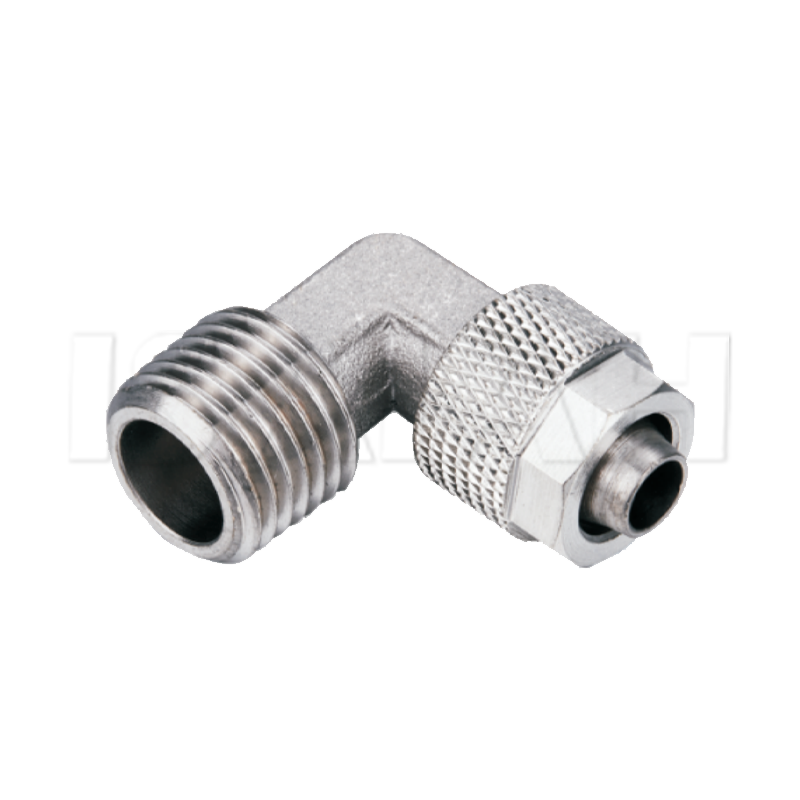
For example, a premium Tapered Elbow design often integrates NPT or BSPT threads on the manifold side with a seamless push-to-connect port on the output. Advanced swivel elbows allow for full 360-degree rotation after installation, preventing tube kinking in dynamic robotic arms. Standard working pressures for high-quality composite and brass variants typically range from 0 to 1.0 MPa—roughly up to 150 PSI—making them perfect for standard factory air logic systems. Having immediate access to these specific configurations ensures that engineers can design highly efficient space-saving pneumatic circuits without being artificially constrained by hardware limitations.
Finding Reliable Brass Fitting Suppliers
While composite plastic components are perfectly suited for standard factory pneumatics, heavy-duty applications demand the resilience of solid metal. Brass remains the undisputed industry standard for operational environments exposed to high mechanical vibration, elevated ambient temperatures, or potential blunt impacts.
When vetting brass fitting suppliers, meticulous attention must be paid to raw material purity and protective surface treatments. Standard brass performs admirably. However, for enhanced longevity in wet, humid, or mildly corrosive atmospheres, nickel-plated brass reigns supreme. Nickel plating provides exceptional corrosion resistance and a hardened exterior. Securing suppliers who provide high-grade plated options ensures your infrastructure actively resists oxidation, maintains a clean professional aesthetic, and significantly extends the overall mean time between failures of your critical machinery.
Conclusion
A push-to-connect mechanism achieves its remarkable threadless hold through an ingenious synergy of mechanical engineering and material science. By utilizing a hardened stainless steel collet that bites aggressively into the tubing, paired with an internal elastomer O-ring that creates an impenetrable barrier, these components eliminate the need for cumbersome wrenches and messy chemical sealants.
While the underlying mechanism is beautifully simple, the execution of that design dictates its success in the field. Precision engineering and tight manufacturing tolerances are what separate a leak-proof circuit from a costly maintenance nightmare. By choosing reliable certified suppliers for your next piping or automation project, you safeguard your infrastructure against premature wear, drastically reduce installation labor, and elevate the overall efficiency of your fluid transfer systems.
If you are looking to upgrade your pneumatic automation lines or require robust, industrial-grade fluid routing solutions, explore the extensive catalog at Isaiah PC. From 360-degree swivel elbows to premium nickel-plated brass connectors, Isaiah PC provides engineered solutions designed to eliminate downtime and maximize your operational efficiency. Upgrade your systems today with components built for uncompromising reliability.
FAQ
Can a threadless connector handle high pressure?
Yes, their pressure handling capabilities are exceptionally reliable, though they are entirely dependent on the specific materials used in their construction. Standard composite plastic bodies paired with polyurethane tubing are typically rated for up to 1.0 MPa, which easily accommodates the vast majority of standard factory pneumatic systems. Conversely, brass and stainless steel variants paired with rigid nylon tubing can safely manage dynamic pressures exceeding 250 PSI. Always cross-reference the manufacturer technical data sheets to ensure the component pressure rating aligns with your system maximum output.
Are these components reusable?
Absolutely. One of their most compelling economic advantages is their inherent reusability. The external release collar allows technicians to quickly disengage the internal grab ring, extract the tubing, and redeploy the hardware multiple times. This feature makes them highly cost-effective for rapid prototyping, temporary fluid setups, and routine machine maintenance. Keep in mind that the internal elastomer O-ring will eventually experience wear after dozens of repeated insertions. If a previously reliable joint begins to exhibit micro-leaks after extensive reuse, it has simply reached the end of its lifecycle and should be replaced.
Do I need special tubing for a quick connection?
These engineered connectors are specifically designed to interface seamlessly with calibrated semi-rigid tubing. The most common and highly recommended compatible materials include Polyurethane, Nylon, Teflon PTFE, and Polyethylene. The tubing must possess a highly consistent outer diameter and sufficient durometer hardness so the metal collet teeth can bite securely into the surface without crushing the tube wall. If your application strictly requires very soft highly flexible tubing like silicone, you must insert a rigid metal or plastic tube support into the end of the line before pushing it into the receptacle.
Will the seal degrade or leak over time?
When installed correctly utilizing a clean perfectly square tubing cut, high-quality threadless joints provide a permanent highly reliable seal that will not degrade over time. The internal O-ring is chemically engineered to maintain its elasticity and sealing properties for years under normal specified operating conditions. The fundamental design is dynamic. As internal system pressure increases, the fluid or air actively forces the O-ring tighter against the tubing wall, actually enhancing the strength of the seal. Long-term leaks are almost exclusively caused by external environmental factors, such as severe lateral side-loading stress on the tubing or blunt physical trauma to the housing.
What is the difference between push-to-connect and compression fittings?
The primary difference lies in the installation method and reusability. Push-to-connect systems require zero tools—you simply push the tubing into the port, and internal mechanical teeth lock it in place. They are designed for rapid assembly and easy disconnection. Compression fittings, on the other hand, require wrenches to tighten a metal nut over a ferrule, which physically crushes onto the tubing to form a seal. Compression joints are generally permanent, much slower to install, and are typically reserved for rigid metal piping like copper or stainless steel where extreme pressures are present.
Can these threadless connectors be used for water or just air?
They are widely used for both pneumatic air systems and fluid transfer, including water. However, the internal O-ring material and the body material must be rated for the specific fluid. Standard NBR seals work perfectly for compressed air and neutral water. For potable drinking water, food-grade applications, or aggressive chemicals, you must select connectors equipped with specialized seals like Viton or EPDM, and bodies made from stainless steel or FDA-approved polymers. Always verify the fluid compatibility chart provided by the manufacturer before installation.
Mainly produce the pneumatic components, pneumatic control components, pneumatic actuators, air condition units etc. The sales network are all over the provinces of China,
and more than 80 countries and regions in the world.

 English
 简体中文
简体中文