Fluid or air leaks in pneumatic and plumbing networks do more than just make a hissing sound. They trigger costly downtime, safety hazards, and severe operational inefficiency. For engineers, maintenance crews, and facility managers, stopping these headaches starts at the very connection points. Selecting the correct coupling mechanism is a critical design decision that dictates the longevity and safety of your entire infrastructure.
Today, the two most ubiquitous solutions for marrying tubing to pipes or valves are push-in pneumatic fittings and compression variants. Both accomplish the basic goal of sealing a fluid or gas pathway. However, their internal architectures, optimal environments, and performance ceilings are worlds apart.
In this comprehensive guide, we dive deep into a side-by-side technical evaluation of these two connection types. By unpacking their structural designs, material compatibilities, and real-world pressure tolerances, you will gain the insights needed to make an evidence-based selection for your next industrial or commercial project.
Key Takeaways
- Push-in pneumatic fittings offer unmatched speed and convenience, making them the ideal choice for low-pressure automation systems and rapid maintenance repairs.
- A compression setup provides a highly secure, mechanical, and leak-proof seal specifically engineered for high-pressure, high-temperature, and permanent installations.
- Brass components represent the industry standard for durability. They offer excellent corrosion resistance and the mechanical strength required to handle rigid tubing like copper, aluminum, or thick-walled plastics.
- Choosing reputable manufacturers is just as important as selecting the fitting type itself to ensure precision machining, system safety, and long-term reliability.
What Are Push-In Pneumatic Fittings?
Often referred to as push-to-connect fittings, these components are engineered for rapid, tool-free assembly. They dominate automated pneumatic logic systems where the speed of installation and system modularity take precedence over extreme pressure handling.
The internal mechanism relies on a highly efficient sequence of parts. When a technician inserts a tube into the fitting, it glides through a release collar and enters a stainless steel grab ring, commonly known as the collet. The angled teeth of this collet bite into the exterior surface of the tubing, locking it firmly in place. Simultaneously, the tubing passes through an internal rubber O-ring, usually crafted from synthetic rubbers like NBR, FKM, or EPDM. This O-ring compresses against the outside diameter of the tube to establish an airtight primary seal.
The Advantages of Push-In Fittings
- Tool-Free Installation: The standout benefit is instant connectivity. Users simply push the tubing into the port until it bottoms out. This creates an immediate seal without wrestling with wrenches or specialized equipment.
- Easy Disconnection and Reusability: Maintenance is a breeze. Depressing the release ring forces the teeth of the collet to disengage, allowing the tubing to slide out effortlessly. This feature makes them highly reusable and perfect for dynamic systems requiring frequent reconfiguration.
- Ideal for Tight Spaces: Picture a cramped, densely packed robotic control panel. Because these fittings do not require the swing clearance of a hand tool, they are incredibly practical in compact mechanical assemblies.
The Disadvantages of Push-In Fittings
- Lower Pressure and Temperature Ratings: Relying on a synthetic elastomer O-ring and a friction-based collet naturally limits their operational ceiling. They typically max out around 150 PSI and struggle in high-heat environments where rubber degrades.
- Vulnerability to Surface Damage: The O-ring demands a flawless surface to seal correctly. If the tubing is scratched, covered in industrial debris, or cut at a jagged angle, the system is highly susceptible to micro-leaks.
- Material Limitations: Designed primarily for softer, flexible lines like polyurethane, nylon, and polyethylene, they often fail to properly grip hard metal pipes.
What is a Compression Fitting and How Does It Work?
A compression fitting is a robust mechanical coupling used to join two pipes or adapt a tube to a threaded port. Unlike the plug-and-play nature of push-in variants, this mechanism harnesses sheer mechanical force to forge a virtually indestructible, permanent seal.
The architecture consists of three distinct components. You have the heavy-duty fitting body, a threaded compression nut, and a tapered ferrule, frequently called an olive or compression ring. To execute the connection, the installer slides the nut and ferrule over the tubing end before seating the tube deep into the fitting body. As a wrench tightens the nut onto the body threads, it drives the ferrule into a tapered internal cavity. This immense physical pressure forces the ferrule to swage, meaning it permanently deforms, biting directly into the tubing wall to create a flawless metal-to-metal barrier.
The Advantages of a Compression Setup
- Exceptional Pressure and Temperature Handling: By eliminating rubber seals in favor of mechanical deformation, these fittings shrug off extreme industrial environments. High-quality models easily handle thousands of PSI and intense thermal fluctuations without failing.
- Highly Reliable Mechanical Seal: The biting action of the swaged ferrule establishes a connection highly resistant to blowouts. This makes it the mandated choice for hazardous gases and volatile fluid transfers.
- Broad Tubing Compatibility: They are universally compatible with rigid infrastructure, securely gripping copper, aluminum, stainless steel, and thick-walled hard plastics.
The Disadvantages of a Compression Setup
- Requires Tools for Installation: Assembly demands at least one, and often two, wrenches to properly torque the components. This requires adequate physical clearance in the workspace.
- Slower Installation Time: The methodical process of measuring, cutting, deburring, seating the ferrule, and tightening takes significantly longer than simply pushing a tube into a port.
- Limited Reusability: While the main body and nut survive for future use, the ferrule permanently alters the tubing. Once compressed, that specific ferrule cannot be reused. Remaking the connection requires cutting off the old tubing end and utilizing a fresh ferrule.
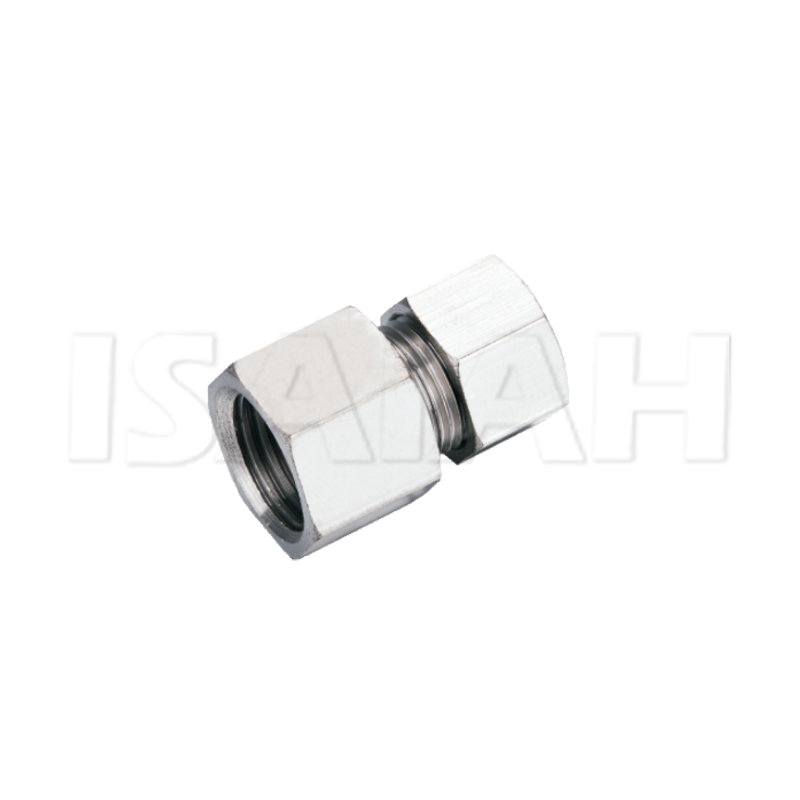
Push-in vs. Compression Fittings: A Head-to-Head Comparison
To make an informed engineering decision, you must cross-examine these two technologies across critical operational metrics. Both have distinct strengths. Deploying them in the wrong environment invites inevitable system failure.
Installation Speed and Ease of Use
In scenarios where time directly equals money, push-in fittings reign supreme. An entire automated assembly line can be plumbed in a matter of minutes without a single hand tool. Conversely, compression setups demand a deliberate, methodical approach. The wrench-tightening process requires upfront labor, but this initial investment pays massive dividends in long-term stability.
Pressure and Temperature Ratings
Industrial environments are notoriously unforgiving. A plastic push-to-connect fitting may warp, or its internal O-ring might melt under high heat or aggressive chemicals. Under these volatile conditions, mechanical compression is structurally superior. High-grade brass connectors can easily sustain operating temperatures from negative 20 degrees to 120 degrees Celsius. The metal-on-metal seal remains resolute even when subjected to thermal expansion or heavy hydraulic pressure spikes.
Tubing Compatibility
Your choice of tubing frequently dictates your fitting selection. If a system requires flexible pneumatic routing that bends and moves alongside a robotic arm, soft polyurethane tubing paired with push-in fittings is the industry standard. However, if you are routing stationary municipal water, combustible gas, or hydraulic fluid through rigid copper piping, mechanical compression is absolutely mandatory.
Cost and Long-Term Value
Initially, push-in systems present a lower upfront cost, largely due to the drastic reduction in labor hours during installation. Yet, for permanent installations in demanding environments, compression fittings offer unparalleled lifecycle value. The slightly higher initial labor cost is quickly offset by the elimination of leak-related maintenance and the prevention of catastrophic system downtime over a multi-year lifespan.
| Feature | Push-in Pneumatic Fittings | Compression Fittings |
| Installation Tooling | None required | Wrenches required |
| Installation Speed | Very fast | Slower and methodical |
| Primary Seal Mechanism | Rubber O-ring and gripping collet | Mechanical deformation of a ferrule |
| Pressure Tolerance | Low to Moderate, typically under 150 PSI | High to Extreme, often exceeding 1000 PSI |
| Ideal Tubing Material | Soft and Flexible, like PU or Nylon | Rigid and Hard, like Copper or Steel |
| Reusability | High, easy to disconnect and reuse | Low, ferrule permanently deforms |
Industry Trends: The Shift Toward Application-Specific Engineering
Analyzing recent developments in fluid power and industrial plumbing reveals a clear divergence in how engineers specify components. Driven by the rise of smart manufacturing and predictive maintenance protocols, modern facilities are no longer settling for generic hardware solutions.
In the automation and packaging sectors, the relentless push for miniaturization has accelerated the adoption of ultra-compact, modular push-in fittings. Modern production lines feature end-of-arm tooling that must be swapped out in seconds during shift changes. This makes the instant-release nature of these fittings an operational necessity rather than a luxury.
Furthermore, heavy process industries are moving in a stricter direction. Chemical manufacturing, oil refineries, and high-pressure pneumatic plants face stringent environmental and safety regulations. Plant managers are increasingly standardizing on high-grade metal fittings to mitigate the risk of micro-leaks. Even a minor pressure drop can trigger sensitive smart sensors, causing unnecessary and highly expensive automated shutdowns. This bifurcated trend underscores a vital engineering principle. You must match the exact physical properties of the fitting directly to the specific risk profile of the application.
Why Brass Compression Fittings Are the Industry Standard
When evaluating materials for mechanical couplings, brass consistently emerges as the undisputed champion across a wide array of industries. A Brass Compression Fitting strikes a perfect balance between mechanical brute strength, superior machinability, and environmental resilience.
Corrosion Resistance and Strength
Brass is a resilient alloy composed of copper and zinc. This unique metallurgical blend provides inherent resistance to rust and oxidation. Such defense is vital when routing potable water or operating compressed air systems, which naturally generate internal moisture. In addition, brass compression fittings possess the high tensile strength required to absorb heavy mechanical vibrations. Imagine a high-vibration CNC machine or a massive industrial compressor. Cheap plastic alternatives would quickly crack under the stress. Brass maintains its structural integrity and flawless seal, especially when utilizing robust G female threads for heavy-duty manifold integration.
Versatility in Application
The sheer durability of brass allows these components to be deployed across incredibly diverse sectors. They serve as the backbone for heavy-duty air brakes in commercial vehicles, municipal water distribution grids, residential plumbing networks, and low-pressure hydraulic power units. Their ability to deliver a leak-free guarantee under constant vibrational stress makes them an indispensable asset in heavy machinery.
Application Guide: When to Use Which Fitting?
Selecting the correct fitting ultimately comes down to analyzing the specific demands and hazards of your operating environment. A mismatch here will inevitably lead to premature system failure.
Best Use Cases for Push-In Fittings
- Robotics and Automation: Complex, multi-line pneumatic logic circuits require flexible tubing that bends with moving parts and allows for rapid swapping during maintenance cycles.
- Temporary Air Lines: Construction sites, mobile testing rigs, or temporary manufacturing setups benefit immensely from rapid assembly and teardown capabilities.
- Low-Pressure Fluid Transfer: Systems like reverse osmosis water filtration units or electronics cooling loops where fluid pressures remain well within safe, low-PSI operating limits.
Best Use Cases for Compression Fittings
- Heavy-Duty Industrial Pneumatics: Main air distribution lines operating continuously at high pressures, where a sudden blowout would introduce severe safety risks to personnel.
- Plumbing and Gas Lines: Permanent residential and commercial water piping. They are legally mandated for natural gas distribution, where leak prevention is absolutely critical.
- Automotive and Chemical Processing: Brake lines, fuel routing, and systems transferring potentially hazardous or aggressive fluids that demand a permanent, vibration-resistant mechanical seal.
How to Choose the Right Compression Fittings Manufacturers
The reliability of any mechanical connection is entirely dependent on the dimensional accuracy of its individual parts. A poorly machined body, a nut with inconsistent thread pitches, or a malformed ferrule will inevitably result in catastrophic leaks. This holds true regardless of how meticulously the fitting is installed.
Quality Control Matters
When a ferrule is compressed, it must deform evenly around the entire 360-degree circumference of the tube. If the fitting is manufactured from cheap, porous, recycled metal, or features imprecise dimensions, the compression will be lopsided. This creates microscopic pathways for compressed air or pressurized fluid to escape. Therefore, sourcing your hardware from reputable Compression Fittings Manufacturers is a foundational step in safe system design.
What to Look For in a Supplier
When evaluating potential suppliers, procurement managers and engineers should rigorously verify the following manufacturing standards:
- Precision Machining: Ensure the manufacturer utilizes advanced Computer Numerical Control technology to maintain incredibly strict dimensional tolerances across all production batches.
- Material Certifications: The supplier should use premium, certified brass alloys rather than low-quality metals containing impurities that lead to brittleness and cracking under torque.
- Comprehensive Inventory: A trustworthy manufacturer will offer a vast array of thread standards, including National Pipe Thread, British Standard Pipe Taper, and Metric configurations, to guarantee seamless integration with global industrial equipment.
Step-by-Step Guide: How to Install a Compression Fitting
Proper installation is the only way to guarantee a leak-proof mechanical seal. Even the highest-quality fitting will fail if assembled carelessly. Follow these precise steps for optimal performance:
First, cut the tubing squarely. Utilize a dedicated tube cutter rather than a rough hacksaw. Ensure the cut is perfectly clean and exactly 90 degrees to the axis of the tubing. An angled cut forces the ferrule to seat unevenly, practically guaranteeing a blowout under pressure.
Next, deburr the edges. Use a specialized deburring tool or reamer to clear away any internal or external metal shavings, burrs, or rough edges. Leftover burrs will severely interfere with the ability of the ferrule to slide smoothly and swage evenly.
Then, slide on the nut and ferrule. First, slide the compression nut onto the tubing with the threaded end facing the freshly cut edge. Next, slide the ferrule onto the tubing. It is critical that the tapered end of the ferrule points directly toward the fitting body.
Insert the tube into the fitting body. Push the tubing firmly into the fitting body until it physically bottoms out against the internal shoulder. You must hold the tubing firmly against this internal stop during the next step to prevent it from backing out while tightening.
Finally, tighten the nut. Thread the nut onto the fitting body by hand until it is completely finger-tight. From there, use two wrenches. One wrench holds the main fitting body stationary, and the other turns the nut. Typically, you should tighten the nut one to one-and-a-quarter turns past finger-tight. Avoid the temptation to over-tighten. Excessive brute force will crush the tubing or crack the ferrule, entirely compromising the seal.
Conclusion
When comparing connection types, the decision ultimately hinges on the specific demands of your application. Push-in fittings deliver unparalleled speed, convenience, and flexibility. This makes them the undisputed champions for low-pressure automation and rapid-assembly tasks.
In contrast, compression fittings provide vastly superior durability, extreme pressure handling, and thermal resistance. For permanent infrastructure, heavy machinery, or rigid metal tubing setups, a brass compression connection remains the safest and most reliable choice on the market.
Do not compromise the integrity of your fluid or air networks with subpar components. Always prioritize high-quality, precision-engineered hardware to ensure operational safety and drastically reduce long-term maintenance costs. For a comprehensive catalog of precision-engineered pneumatic solutions, explore the high-performance offerings at https://www.isaiahpc.com to find the exact match for your infrastructure.
FAQ
Can I reuse a compression fitting?
The main fitting body and the compression nut can usually be reused safely, provided their internal threads are not stripped or cross-threaded. However, the ferrule permanently deforms and bites deep into the pipe during the initial torqueing process. It cannot be removed or reused. To successfully remake a connection, you must cut off the damaged section of the tube containing the old ferrule and install a brand-new ferrule.
Do compression fittings leak over time?
If installed correctly using high-grade components from reputable manufacturers, they are incredibly reliable and rarely, if ever, leak. When leaks do occur, they are almost always the result of improper installation. This includes severe under-tightening, over-tightening that crushes the pipe, failing to deburr the tubing edges, or subjecting the connection to extreme vibrational stress well beyond its structural rating.
Can I use a brass compression fitting on plastic tubing?
Yes, they can be utilized on rigid or semi-rigid plastic tubing, but this requires one critical additional component. You must use an internal tube insert, often called a stiffener. This small metal sleeve is placed inside the end of the plastic tube to support the inner walls. Without this stiffener, the intense mechanical pressure of the tightening ferrule will simply crush and collapse the plastic tubing, leading to an immediate and messy leak.
Which holds more pressure: push-in or compression?
Compression fittings universally hold significantly higher pressure than push-in alternatives. Push-in connections rely on a pliable rubber O-ring and a set of gripping teeth, which have strict physical limits before they distort and blow out. Conversely, the mechanical nut-and-ferrule design of a compression connection physically binds the solid metal components together. This allows it to safely withstand extreme industrial pressures that would instantly destroy a push-in fitting.
What causes a push-in fitting to leak?
Leaks in push-in systems are typically caused by damaged tubing or worn internal O-rings. If the tubing is cut at an angle, deeply scratched, or covered in dirt, the O-ring cannot form a proper seal around the exterior. Additionally, exposing the fitting to temperatures or chemicals that exceed the rating of the rubber will cause the seal to degrade, harden, and eventually leak.
How do you measure a compression fitting size?
Sizing a compression fitting requires measuring the outside diameter of the tubing you intend to connect. The fitting size directly corresponds to this outside diameter, not the inside diameter. For the threaded end of the fitting, you must determine the thread type, such as NPT or BSPT, and measure the thread pitch and diameter using a caliper and thread gauge to ensure a proper mating connection.

 English
 简体中文